‘News of the World’ review- brutal but heartwarming and well-acted.
allocine.fr
Tom Hanks is clearly a man who picks his projects, based upon his own moderate, liberal outlook of the world. And ‘News of the World’ is certainly no exception to this rule. He seems to want to represent himself as the “middle ground” film star. Attempting to attract more conservative viewers with its western/cowboy setting whilst appealing to his own ideology as a man who believes in the free press, he is one that likes to ride that middle ground firmly. He is a man who knows toughness and hardship but is still a believer in American values.
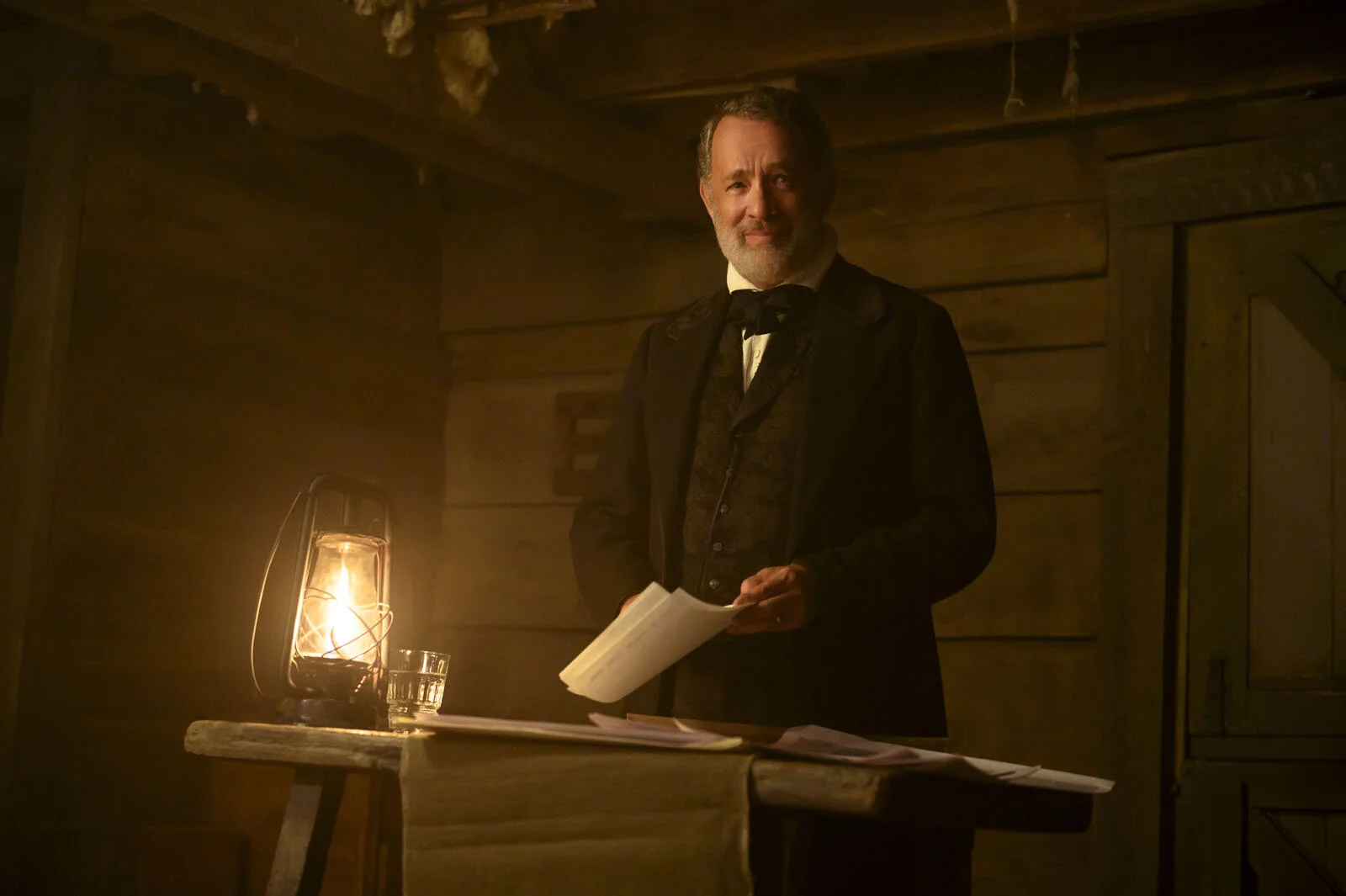
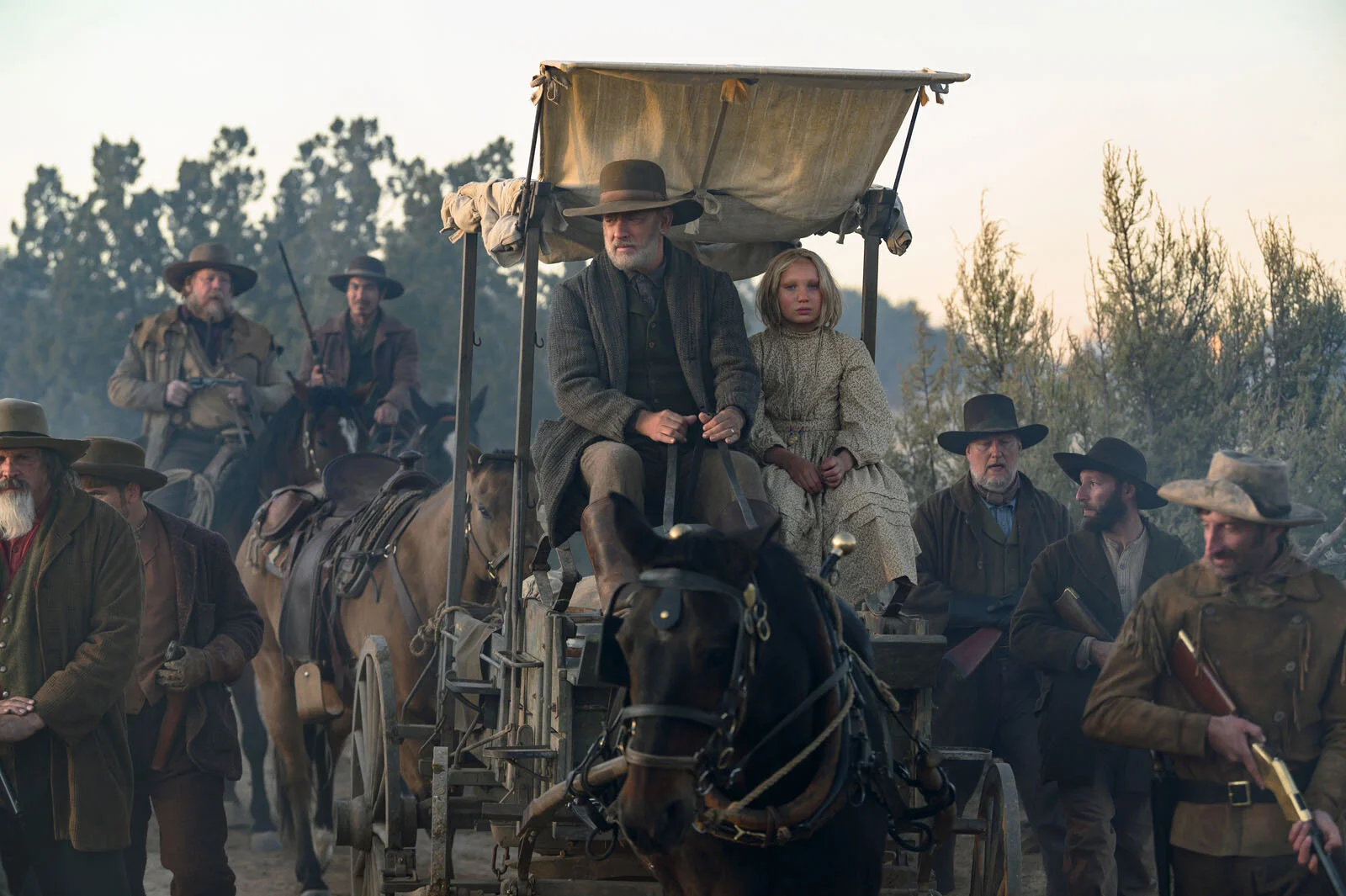
He is Captain Jefferson Kidd, a man who goes town to town in the American frontier to read the news. Whilst riding onto his next venture, he encounters a little girl called Johana (Helena Zengel) dressed in Native American clothing. She is German but had been raised by Native Americans, now going by the name of Cicada. Kidd is then assigned to take her back to her uncle and aunt, her only surviving birth family.
allocine.fr
‘News of the World’ is a classic American story, one that evokes the films of directors like John Ford. There are certainly elements of ‘The Searchers’, particularly in which its main female character is a white girl raised by Natives, much like Natalie Wood’s Debbie. It is directed by Paul Greengrass, a filmmaker known for his realistic, high intensity thrillers such as the Bourne Franchise and ‘Captain Phillips’. Greengrass has opted to go the quieter route for this film, one in which the most meaningful language is not said through words, but through expression. Language and communication are the key themes of the film. Though Kidd and Cicada do not speak the same language, they find ways of communication elsewhere. Both teach each other English and the Kiowa language to better understand themselves. They are both of different generations and cultures, yet the brutality of the West is what draws them together. One scene features a town dominated by a dictatorial leader who manipulates the press to saying good things about him (clearly Greengrass and Hanks’s take on the former President). Hanks’s character refuses, reading from more legitimate sources, capturing the attention of both the crowd and Johanna. Its this sort of hardhearted approach to American beliefs that some may find overtly optimistic, but it works as a scene that will empower its audience.
The film is very much weighted on the performances of Hanks and Zengel. Unlike some of his contemporaries, Hanks does not hide away from his age. He is an older man now, perhaps no longer capable of dancing on the ‘Big’ keyboard. But his face shows a man who has experienced much. And he delivers a performance that has that trademark, Jimmy Stewart sweetness that has engulfed much of his career.
Likewise, Zengler is similarly excellent, demonstrating a haunted tenacity that gives Johanna a lot of depth. For a girl of only 12, she really acts effectively alongside Hanks. It is a complex performance and she successfully gives it her all.
Often, the film can feel slow at times. And despite the impressive, cinematography, there are moments where the camera feels too mechanical, as if Greengrass really wants you to know the camera is there, rather than just fully enveloping oneself into the shots.
Certainly, more could have been done with Johanna/Cicada’s relationship with the Native Americans. Yet, as a touching relationship between surrogate father and daughter, Greengrass has developed an effective story that will engross its audience.